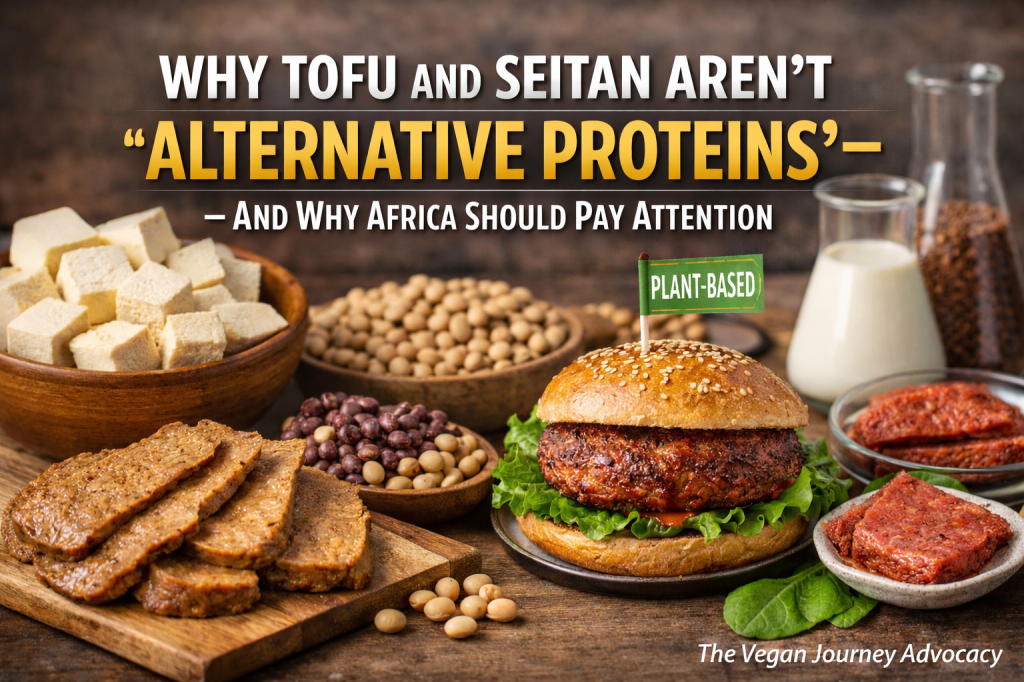
I’ll be honest.
When I first heard that tofu and seitan aren’t classified as alternative proteins, I paused. ( like What???)
As a vegan advocate, those foods are staples. They’re affordable. they’re protein rich. They replace meat on my plates every day.
So why the resistance to calling them alternative proteins?
So here’s what I’ve come to understand.
Research and industry knowledge show that alternative protein isn’t just a plant-based label.
It refers to proteins intentionally developed to replace conventional animal agriculture at scale through food technology, fermentation, extrusion, and cultivated meat.
Companies like Beyond Meat aren’t just selling plant protein. They’re engineering products to compete directly with beef in mainstream markets.
Tofu and seitan?
They weren’t created to disrupt livestock systems. They are traditional foods with their own identity.
And this is where Africa enters the conversation.
If we think alternative protein simply means anything plant-based, we might miss the bigger opportunity.
Globally, the term is tied to : Investment
• Research funding
• Policy influence
• Large-scale food and
system transformation
The real question for us is not whether tofu qualifies.
It’s this:
Will Africa only consume alternative protein innovation or are we going to build it?
We have soy.
We have legumes.
We have indigenous crops with serious protein potential.
But are we positioning them within the innovation and scalability conversation?
This debate isn’t about semantics.
It’s about whether Africa shows up as a market or as a leader.